Showing posts with label poverty. Show all posts

Monday, October 23, 2017

Uzo survives

I haven’t heard from my friend Uzo in a long while and then I get this message.

“I am currently writing you from a low-cost hotel. I lost "everything" in my apartment to a flood which devastated many homes in my vicinity (it rained heavily for six hours). Ah! It was really bad. In one case, neighbours had to break into a man’s fortress-like house (he wasn’t present at the time) to carry off his bedridden wife.

I think I can now relate on a deeper level with victims of Hurricanes Harvey and Irma.”

I Google his city (in Nigeria) and find pictures like this.
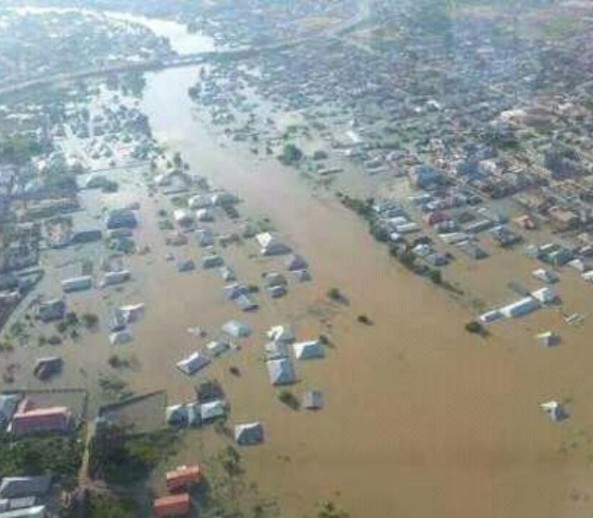
Uzo survives

Yes, I think, he can relate.

I write back and comment that a “low-cost” hotel can’t be very nice. (I’ve seen enough in many parts of the world to know what they are like.)

Uzo writes back.

“Well, the hotel room is better when compared to other places I lived in—a two-bedroom apartment with a leaky roof, and then a mud house in the northern part of the country (in this case, I had to fetch water each day and there was no power throughout my one-year-and-a-half stay).

“I've to reprioritize my spending from now on, bearing in mind I have to replace (buy) some essentials at least, like settee and chair cushions, electronics. You may be wondering, but most of us (if not all) do not have insurance (schemes). I don't trust the state government to help; they put us in this mess with their shitty road constructions. They've seen the extent of damage caused by the disaster and are saying help is not for everyone. Can you imagine that?”

I ask if he’ll be able to move back to his home.

“Yes, I intend to go back home. In the meantime, I've invited some friends to help me clear, reorganize, and wash the things I can still use.”

I admire Uzo’s strength and resiliency. And I bitterly resent those who could, but don’t help—the wealthy elite of the world.

www.darlenejonesauthor.com

Thursday, May 11, 2017

A picture paints 300 words for this prairie girl

                                      http://www.anneli-purchase.com/

This story was inspired by Anneli’s challenge to write 300 words about her picture above taken in Montana. I lived in Saskatchewan as a child so this scene is familiar to me.

*******  
The Farm
She pulled the wooden chair over to the wall, climbed up on it and turned on the radio. Hop-Along Cassidy, her favorite show was coming on and with her ear glued to the radio, she wouldn’t miss even one word of it.
Suddenly, her dad ran into the kitchen—without even taking his boots off—calling for her mother. She wanted to ask him to be quiet, but knew better and plastered her ear even harder against the radio speaker.
Her mother came in from the bedroom. “What’s wrong?”
“My wallet. I’ve lost my wallet.” She shivered for the voice coming out of her father’s mouth didn’t sound like him.
“Here,” her mother said, shoving the baby into her arms, and switching off the radio. And then her parents were gone. Scared to get off the chair with the baby in her arms, she stayed where she was. She tried reaching the knob to turn the radio back on, but wasn’t able to hold the baby with just one hand.
From where she stood, she could see out the small porch window. The tractor and harrow stood in the middle of the field and her parents ran around madly, with their heads down as if searching for something.
A very long time later, her mother came in and took the baby from her aching arms. She climbed down from the chair and put it back by the table. Then her father came in. He was crying. She’d never seen him cry before and the great sobs tore at something inside her.
“Forty dollars?” her mother asked.
Her father nodded.
“It was supposed to last us the winter.”
Her father nodded again and sank onto one of the kitchen chairs, staring down at the floor. The silence seemed to drag on forever. They went to bed soon after. Her mother didn’t even cook dinner that night.

Sunday, August 28, 2016

The Good Old Days


God, my mom could tell you about prairie life—the loneliness and isolation—no neighbours for miles and miles.

And winds—always winds—blowing  the top soil away, or packing the snow into drifts sometimes as high as the house and so hard the cattle and horses could walk on them without breaking through.

And the poverty; fried potatoes and eggs three times a day all winter because that was all they had, walking nine miles to town with a dime to buy a box of corn flakes and taking the penny change home to her mother.

Wearing hand-me-downs from her aunts—flapper dresses that didn't fit, the neckline hanging much too low on her gangly teen body. Wearing her brothers' long johns under her dresses—long johns that bagged and sagged under those flapper dresses (imagine how lovely that looked), her legs rubbed raw from her rubber boots—the only boots she had. Using goose fat to try to cure chapped skin.

And the terrible depression that ensued from it all.

We moved to the city with its modern conveniences when I was ten. Mom was not sorry to leave those “good old days” behind.  


Friday, November 21, 2014

Picture taking - virtue or vice


Writers create worlds with their words.  And if the writer is a master at his or her craft the words allow the reader to “see” a vivid picture of the scene, understand the characters, and thrill with the action. For many readers, creating their own images and impressions from word pictures is what makes reading superior to visual media.  

Yet, as I type this, the saying, “a picture is worth a thousand words” reverberates in my head.

How do I feel about picture taking?

Very guilty:
Many years ago, I sat on the upper deck of the General Soumare plying its way up the Niger River to Tombouctou. We docked at Goundam and watched, fascinated by the desert life on shore. Without moving from my chair, I reached down into my purse for my little camera. I had it partially out of my purse when someone in the circle of Touraug women spotted it. They began to rise and depart. I dropped my camera back into my purse and they settled into their circle again.

Guilty and angry:
I time travelled to the Dogon area of Mali. I use the words “time travel” deliberately as we were among people surviving in Stone Age conditions. What they lived on was hard to fathom. Of course I wanted pictures. I raised my camera to capture a mother and her child. The moment she saw my camera, she picked up her child and posed, then held her hand out for money. I put my camera away. It wasn’t surprising that she would want money—any little bit would help the villagers to survive, but I was angry too, furious that careless camera toting tourists had created this situation. There are many better ways to support the poor.

Angry and insulted:
At one time we lived in a unique river-side community in our city. Cyclists on the trails careened to a stop to talk about our houses. Cars drove by slowly, passengers gawking out their windows. Invariably, cameras appeared—the tourists ready to take pictures of the quaint locals infuriated me. Is that how others felt when I wielded my camera?

Guilty again:
I take pictures for my blog—many of them in Mexico. They’re not very good photos, because I feel that I’m intrusive of people’s lives and homes so I snap quickly and hide the camera. I don’t believe I have a right to invade their lives in this way.

Regretful:
Of course I come home with regrets for the photos not taken.  I would dearly love that picture of the man on the horse waiting at the red light alongside my car or the man walking his cow across the main street of town.


Pictures are important, providing glimpses into the past, evidence of crimes, sights to marvel at, an opportunity to travel from your armchair, but at what cost to the subjects of those pictures?

Wednesday, August 27, 2014

Kenya and Canada - Polar Opposites


“Here’s the shopping center,” our driver says as we approach the ramshackle cluster of buildings with no sign on the horizon of a town or a village. We’re on safari in the Masai Mara. I’d thought to find Kenya a bit more prosperous than Mali, but that doesn’t seem to be the case.
We see stick-thin children, distended bellies, missing limbs, runny noses, and smiles. How can they possibly have anything to smile about?
We see men wobbling along on bicycles with impossibly huge loads, others pushing their bikes as the load they carry is too heavy and unwieldy to allow riding. We see a long line of men and women digging a narrow ditch with pick-axes and shovels. It’s for fiber optic cable.
Wood smolders beneath a huge pile of dirt. Several trees will produce a few bags of inefficient soft charcoal. Where are the solar ovens?
“It’s illegal to throw out food in Kenya,” we are told. What food?
We have so much. They have so little.
The extremes seem insurmountable. What can one individual do?
I know what I can do. I can truly appreciate what I have in Canada and the good fortune I had to be born here. I can put my money where my mouth is and donate. For me, that means KIVA.
I can help others directly; the young man in Nigeria who sends me chapters to edit, the young family in Mexico who don’t always know where their next meal is coming from, and, closer to home, the Salvation Army, the food bank….
And I can write—my blog and my novels—trying to show the other side of the coin. Perhaps through the power of words, I can influence people in our lands of plenty to care and to help.
KIVA: Loans that change lives:  http://www.kiva.org/start


Friday, May 23, 2014

How did you get hooked on reading?


M said:

Perhaps because I'm an only child books were ever-present friends and I immersed myself in them from an early age. My father was an avid reader and he introduced me to his library when I was young, encouraging me to read what he felt were age-appropriate selections from his collection. I now have his library integrated with my own. He favoured Canadian and British authors and anticipated new publications from favourite writers. He particularly enjoyed historical novels such as those penned by Thomas Costain and Pierre Berton, authors I could read when young and revisit later on and appreciate differently. I was always given books at Christmas and on my birthday, this still being my fervent request. The women in the book club to which I belong have eclectic tastes. Some of these women either are British or married to Brits. Because of this my horizons have been expanded to include authors I might not have readily found or gravitated to. And so my passion continues to be fueled.

And what, Darlene, sparked your passion? 

I was an only child on a farm in Saskatchewan—isolated and lonely—for many years before my sisters came along. Mom and Dad were poor so I had few toys and fewer books. Little Lulu comics were a huge treat and I poured over them endlessly. (I wish I had kept them.) Once in a while Dad had a little extra money and he'd buy the big fat edition. You can imagine my delight.

Then I started school in the one-room school house and discovered books. I read all that the little book room at the back had to offer and then read them again. Moving to the city brought the miracle of the bookmobile that came to our corner. But, there was a problem. I could only take out 3 books at a time. I'd pick 6 or 8 that interested me and then agonize over which 3 to take. 

Now all these years later, I still prefer books to all other forms of entertainment.

One child with no books, another surrounded by them and both become avid readers. Perhaps the need to read is within the child more than the circumstances. 

And those who come to reading as adults?

A said:

A friend came to visit my husband and me when we were young newlyweds. She brought along a woman from France. Over dinner, the discussion turned to books. I hadn’t read them, but I’d seen the movies. I realized during the conversation that I missed so much by not reading. I felt my understanding was inadequate. I wanted to read, to catch up. I asked the women what to read. There was a second hand book store a block away. We went over and the French woman began pulling books off the shelves. I went home with a brown paper bag full of books, pulled out Crime and Punishment and began to read. I haven’t stopped since.

P said:

I came to reading late in life. As a child, I hated books. My mother had died; my 14 year old sister was taking care of us. My father was away a lot, and when he was home, he hid behind books, rarely interacting with us. Books, his refuge, were my nemesis.

We were poor. I had no shoes to go to school in. My mother's family had a business—a trading post type of store. We kids played in the sandbox with the family silverware. My schooling was limited to grade five so reading, for me, was not easy. Years later, when my husband was ill, I needed an escape from the caregiving. My daughter-in-law found books that were easy to read and at the same time interesting. I read one, then another and another. Now, reading is a pleasure I wouldn’t want to be without.

And you? What’s your reading story?