Showing posts with label reading. Show all posts

Tuesday, May 23, 2017

Looking for a good book?


Avid readers are always looking for a “good” book. Of course what makes a book good to one reader is not necessarily going to appeal to the next, but we all search for that sometimes elusive read that will have us turning the pages into the wee hours of the night. We read reviews, seek out books on-line, watch for our favorite authors latest releases, and most importantly look for suggestions from fellow readers for word of mouth is said to be the best advertising off all.
And so I present three books I’ve read recently for your consideration.
French Rhapsody by Antoine Laurain
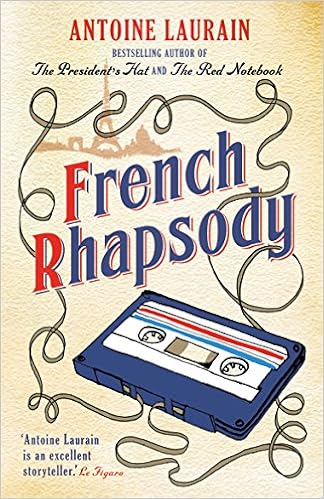
A letter that arrives 33 years late, a rock band that missed a chance to touch fame, the members of that group who have led diverse lives now trying to reconnect. Throw in right wing politics, an upcoming election and you have a compelling read. I decided to read this novel because I had already enjoyed two of Laurain’s books, The President’s Hat and The Red Notebook.
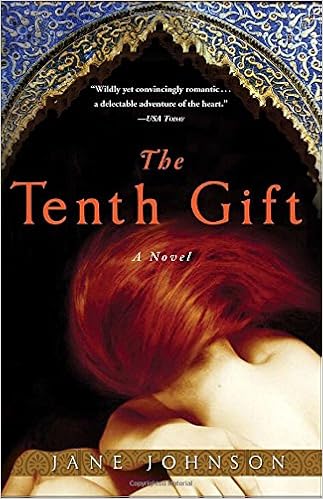
The Tenth Gift by Jane Johnson
Two women who lived 400 years apart are brought together by an embroidery book with faint dairy entries that tells a tale of pirates and captivity in 1625 Morocco. This review comment was enough to entice me to read the book. “The Tenth Gift is wildly yet convincingly romantic—a rare combo…both a sensitive portrayal of Muslim culture and a delectable adventure of the heart.”—USA Today I now have more of Johnson’s novels loaded in my Kindle.
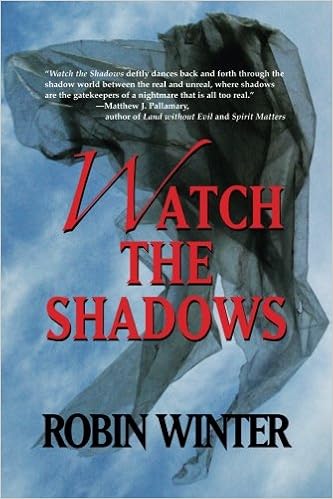
Watch the Shadows by Robin Winter
I know Robin (via our Internet connection) and had already read her first book Night Must Wait, a gripping story of the Biafran War. I tried to read her second book, Future Past, but it was too dark for me. Watch the Shadows is dark too, but so intriguing. Winters brings together a diverse group of characters—several homeless people, a postman, a couple of professors … and and a young girl determined to solve the mystery of the odd things that are happening in her neighborhood. Why are the birds leaving? Why are many of the homeless disappearing? How did her neighbor’s cat lose its tail? I'm glued to this book every night and will be until I finish it.
www.darlenejonesauthor.com

Friday, February 12, 2016

Is a novel a novel without a love story?


Valentine’s Day and love is in the air—and in my books. I couldn’t imagine writing a novel without a love story and at least a bit of hot sex. But love in my books also includes love of family and friends, of life and laughter, and of fellow man.

Love prompts our characters to do many things, to experience a range of emotions that sometimes (often?) takes them down the wrong path. But then that’s good in a book, right?—builds tension, creates suspense, keeps us reading.

In my Em and Yves series, to underscore the action, I created a love triangle, between the heroine, the alien controlling her, and her human lover. Sparks fly, jealousy reigns, emotions run high and play havoc with the story line. In fact it takes four books to sort it all out and yes, there is a happy ending for isn’t that what all love stories deserve?

When the Sun was Mine is a story of love between two strangers; an old lady, who may or may not have Alzheimer’s, and a young girl just graduated from high school. Circumstance brings them together, initial skepticism and fear grow to respect and liking and love, and they offer each other more than they would have thought possible. Yes, the story has its sex bits too.

Mali to Mexico and Points In Between, a collection of short snippets from my life, shows how important people are to each other, and how they, and travel, broaden our perspectives of the world adding deeper dimensions to our love of life.

Happy reading and Happy Valentine’s Day!


Friday, August 14, 2015

Finding a good book


Finding something to read has become little more than hunting for that proverbial needle in the haystack.

In the “old days” we searched the shelves in the library for a title or cover that attracted our attention and then read the blurb. The hunt could take hours, followed by the trek home with an armload of books, only to cart several back unread as they just didn’t appeal.

Now, we receive emails from publishers and Amazon, from book groups like The Fussy Librarian and bloggers we follow, all of whom offer a multitude of suggestions for our reading pleasure.

With each book that captures our interest, we read the blurb, download the sample, and give it a try. Many of these too, will be deleted when the first bit doesn’t hold up to its initial promise.

In this entire time consuming search, it is perhaps the suggestions of fellow readers that hold the most promise for a good or great read.

With that in mind, here are a few books that I feel are worth your time.

The Iron Wire by Garry Kilworth who learned to receive and send Morse code at the age of 15.
Recommended by my aunt who lives in Australia, this recounting of the construction of the Adelaide to Darwin telegraph line is much more intriguing than it sounds. No dull list of facts here. Kilworth imbues the story with drama and a love of the harsh beauty of the land traversed in the stringing of the line.

The Villa Triste by Lucretia Grindle. A modern murder mystery, set apart from most by the fact that it is entwined with characters from WWII. Set in Florence we are shown a different side of the ravages of war as a senior policeman agrees to supervise a murder investigation, after it emerges the victim was once a Partisan hero.

Because We Are: A novel of Haiti by Ted Oswald. Harsh, gritty, and heartbreaking, this look at Haiti today will bring tears, but you won’t be able to stop reading. When ten-year-old orphan Libète discovers the bodies of a murdered mother and child, we are taken into the depths of the of Haiti’s most infamous slum.

Prayers for the Stolen by Jennifer Clement. If you want to know what life is really like for the majority of Mexicans—that is, the poor—read this. It is the most accurate account I have come across.


Friday, July 11, 2014

Reading Reviews - a huge mistake?


I’m reading 419 by Will Ferguson—a powerful story, well told, with turns of phrase that delight.

 “Storms without rain. Winds without water. She woke, and when she sat up, the dust fountained off her and the voice that accompanied her once again stirred, once again whispered, “Get up. Keep walking. Don’t stop.

Vivid imagery abounds.

Zuma rock denoted not only the traditional geographical centre of Nigeria-the “navel of the nation” as it was known-but also the border between the sha’ria states of the north and the Christian states of the sough. Zuma rose up, rounded and sudden, on striated cliffs etched by a thousand years of rainfall and erosion. The ridges carved down its sides were the sort of lines that might be left by acid or tears.”

A woman from Canada, a girl from the north, a young man from the Delta, and a 419er. How will the lives of these disparate characters be woven together? I’m fascinated, enthralled, eager to read each evening, yet dreading the end, dreading the time when the story will be only a memory. The narrative makes me cringe and cry. I know this is a book I will read more than once.

I email my young Nigerian friend to tell him about the novel. He responds:
“ 419 - an internet scam organized by Nigerian scammers (aliases: Yahoo Boys, G-Boys). 419 is an alias that dates back to the past (I believe 1994-1997) in Nigeria, when innocent people, mainly teenagers, were repeatedly abducted and killed. Their bodies or body parts were then used for big money rituals.

I've come across painful remarks on Twitter, Facebook, and some other interactive sites about Nigerians being fraudsters. That they target white people and rob them of their money using various means; including telling them pitiful stories just to incite their help.”

I’m about three quarters of the way through the book at this point and the urge to learn more about Ferguson’s research can no longer be ignored. Goggling proves to be a huge mistake. The first items that come up are reviews from highly respected sources, and while they don’t lambaste the book, they do contain enough negative comments to diminish my pleasure in the reading and cause a rather sour feeling.

I turn away from the computer in disgust, push the reviews out of my mind, and return to my Kindle. I refuse to let someone else’s opinion color my own judgment, my own enjoyment of the novel.
Sitting now, writing this, I wonder if I should stop writing reviews. Am I guilty of spoiling another’s enjoyment, of perhaps causing someone, because of my arrogance, to dismiss a novel without even giving it a chance? Conversely, does a review I write of a book I love convince a reader to pick up that book only to find that it doesn’t work for them? What makes me think I can or should pass judgment for another reader?

But the author in me craves reviews. They’re our “word of mouth” and vital to marketing. If we’re to have sales at all, we need people talking about our books, reviewing them, recommending them to fellow readers.

Amazon sends me emails. “So, Darlene Jones, how did this item meet your expectations?” Do I answer? What do I say? My own sister, daughter, and aunt don’t always like the books I deem worthy of their time.

Yes, I did write a review for 419. Book buyers may or may not read it. They may or may not take it to heart in their decision making, but I’ve decided writing reviews is my obligation to fellow authors. It’s my “word of mouth” gift to them. I hope readers of my books will do the same for me.


Friday, June 13, 2014

Are we dumbing down our nation?


“What are those?” I ask our guide. We’re in the Topkapi Palace in Istanbul in a room filled with boxes, some inlaid with mother of pearl or tortoise shell, others encrusted with precious gems. My first thought is jewelry boxes that once belonged to the ladies of the harem.

“They’re scribes’ boxes,” Ziya says. He points out the slots specially designed for the pens and the little bowl indents that that held the ink looking rather like a miniature carton for eggs.

I’m a teacher and I can’t stop thinking about those boxes. Reading and writing, once highly prized skills, now taken for granted. I look around my classroom. I love my students and we have fun, but do they really care about learning? As principal, I wander in and out of other classrooms; bemoan the seeming lack of interest despite the excellent teaching strategies and effort to engage the students’ interest. I wonder where the curiosity went. I remember the student who sat forward in her desk, the epitome of bright eyed and eager. Why do I only remember one in all the years of teaching?

I listen to parents in my office. Their eagerness to blame the teacher alarms and saddens me. What has happened to suffering the consequences of your actions? Some parents expect a babysitting service and don’t want to be bothered by calls home. Some are obsessed with marks, but seem to care little for the actual learning. Some are genuinely interested in performance results. Their children do well with that parental support.

I watch “teacher/school” movies and cringe at most of them. As John Brantingham says in his blog on Venture Galleries - http://ow.ly/pJJkM, “the clichés put forth in them make me think the general public has no idea what teachers go through.”

I read the reports about the latest salary negotiations. Yes, teachers have to live and eat and pay bills just like anyone else, but you would think they were robbing the bank when they ask for a raise. And I moan when the government announces yet another education budget cut.

I'm constantly frustrated by the shortsightedness of our society when it comes to public education. Teachers are the ones who get everyone started. Without them (and Dick and Jane) our world would be illiterate. Where would we then find our doctors and lawyers and Indian chiefs?

Are we dumbing down our nation? I ask the question in all seriousness. Yes, we have computers and technology, instant methods of communication, and ebooks galore. We are rich in so many ways and live  a pampered lifestyle compared to much of the world, but as a society, I don’t believe we value education as we should. That could become our greatest downfall.


Friday, May 23, 2014

How did you get hooked on reading?


M said:

Perhaps because I'm an only child books were ever-present friends and I immersed myself in them from an early age. My father was an avid reader and he introduced me to his library when I was young, encouraging me to read what he felt were age-appropriate selections from his collection. I now have his library integrated with my own. He favoured Canadian and British authors and anticipated new publications from favourite writers. He particularly enjoyed historical novels such as those penned by Thomas Costain and Pierre Berton, authors I could read when young and revisit later on and appreciate differently. I was always given books at Christmas and on my birthday, this still being my fervent request. The women in the book club to which I belong have eclectic tastes. Some of these women either are British or married to Brits. Because of this my horizons have been expanded to include authors I might not have readily found or gravitated to. And so my passion continues to be fueled.

And what, Darlene, sparked your passion? 

I was an only child on a farm in Saskatchewan—isolated and lonely—for many years before my sisters came along. Mom and Dad were poor so I had few toys and fewer books. Little Lulu comics were a huge treat and I poured over them endlessly. (I wish I had kept them.) Once in a while Dad had a little extra money and he'd buy the big fat edition. You can imagine my delight.

Then I started school in the one-room school house and discovered books. I read all that the little book room at the back had to offer and then read them again. Moving to the city brought the miracle of the bookmobile that came to our corner. But, there was a problem. I could only take out 3 books at a time. I'd pick 6 or 8 that interested me and then agonize over which 3 to take. 

Now all these years later, I still prefer books to all other forms of entertainment.

One child with no books, another surrounded by them and both become avid readers. Perhaps the need to read is within the child more than the circumstances. 

And those who come to reading as adults?

A said:

A friend came to visit my husband and me when we were young newlyweds. She brought along a woman from France. Over dinner, the discussion turned to books. I hadn’t read them, but I’d seen the movies. I realized during the conversation that I missed so much by not reading. I felt my understanding was inadequate. I wanted to read, to catch up. I asked the women what to read. There was a second hand book store a block away. We went over and the French woman began pulling books off the shelves. I went home with a brown paper bag full of books, pulled out Crime and Punishment and began to read. I haven’t stopped since.

P said:

I came to reading late in life. As a child, I hated books. My mother had died; my 14 year old sister was taking care of us. My father was away a lot, and when he was home, he hid behind books, rarely interacting with us. Books, his refuge, were my nemesis.

We were poor. I had no shoes to go to school in. My mother's family had a business—a trading post type of store. We kids played in the sandbox with the family silverware. My schooling was limited to grade five so reading, for me, was not easy. Years later, when my husband was ill, I needed an escape from the caregiving. My daughter-in-law found books that were easy to read and at the same time interesting. I read one, then another and another. Now, reading is a pleasure I wouldn’t want to be without.

And you? What’s your reading story?


Sunday, May 11, 2014

Students in Mali vs Canada


As a CUSO volunteer, I taught school in Bamako, the capital of Mali. When I traveled to Mali many years later, I was invited to the school I had taught at as a guest speaker for the English as a Second Language students. I would be the “document authentique.”
I visited the grade 11 and grade 12 classes. I promised I would answer any question they asked as long as they used English. The students astounded me. They asked about racism, abortion, women’s rights, our political system, and differences between Canadians and Americans. They were curious about my reasons for being in Mali and about other countries I had visited.
When our Malian friend, Raymond, came to Canada I decided to take him to school with me as guest speaker in my French as a Second Language classes. I explained who he was and told my students that he was an Olympic athlete, coach, and, at that time, an Olympic level referee. I encouraged them to ask any questions they liked. They wanted to know if it was hot in Mali and what he ate. He was gracious with his replies. I decided that their limited language skills were getting in the way and offered to translate. The questions were still banal. Disappointed with the kids, I took Raymond home at noon. There was no point in putting him through more of that.
What bothered me then, and still does, was the great divide between the two groups of students. Some of that may be attributed to age differences. The girls in Mali were seventeen-year-olds and my students fourteen. But I’m not convinced that’s a good enough excuse for their complacency and the superficiality of the questions they asked.
Can I chalk it up then, to the affluence of our society, to the ease with which our every desire is satisfied as contrasted with Malians who grow up facing daily hardship—the hunt for food, for firewood, for water…?
What, if anything, would make a difference for our students? When I ask myself that question, books loom large in my mind as the answer. I grew up in a poor home. We always had enough to eat, but certainly didn’t have extras. A five-cent comic book once in a while was a huge treat: the fat twenty-five cent comic rare and treasured. Books, when I could get my hands on some, were life to me then. They still are.
For me, reading is a deep and satisfying activity. Novels spark my curiosity, teach me about the world, about people—character, motivation, emotions. Books make me think and wonder and ponder.
Is that what’s missing in the youth of today? Engrossed with all the available social media—and not having to worry about their very survival—are they missing deeper meanings and understandings? Would reading books make a difference? I think so. Books do have power—more power than some people would like. Why else would they be banned or burned? 
“If we encounter a man of rare intellect, we should ask him what books he reads.”
Ralph Waldo Emerson.