Showing posts with label Nigeria. Show all posts

Thursday, January 25, 2018

The things we take for granted

The things we take for granted

"I can relate with your excitement as a child when you and the rest of your family moved to Edmonton—and my goodness, your story gave me a good laugh," Uzo writes. (I was 9 when we moved and I had told Uzo that I was so fascinated with the flush toilet that I got up several times to use it until my mother finally told me to get back to bed and stay there.)

"The day I left Mambilla plateau," he adds, "I was so eager to browse the Internet, to watch TV, and to enjoy other modern conveniences. That night in Jalingo, the capital of Taraba, I couldn’t sleep; even as an adult, I was so excited about just everything. Everything looked new. I remember I did stare at the bulb in my room from time to time, praying it stayed that way—that it continued to shine its yellow light (the country’s electricity generation has barely improved since then)."

How lucky we are to have power we can count on.

www.darlenejonesauthor.com

Monday, October 23, 2017

Uzo survives

I haven’t heard from my friend Uzo in a long while and then I get this message.

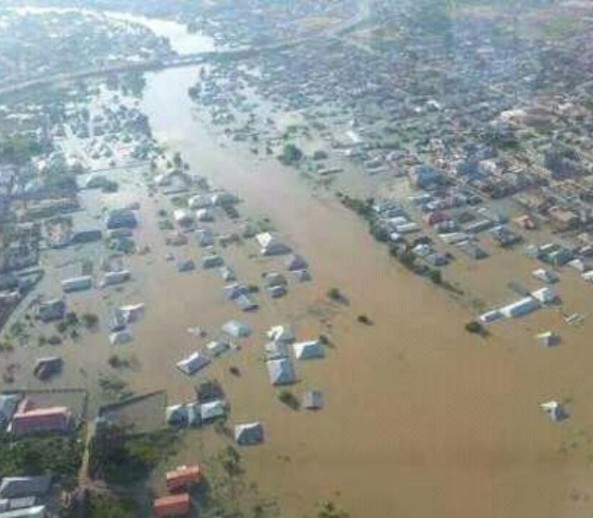
“I am currently writing you from a low-cost hotel. I lost "everything" in my apartment to a flood which devastated many homes in my vicinity (it rained heavily for six hours). Ah! It was really bad. In one case, neighbours had to break into a man’s fortress-like house (he wasn’t present at the time) to carry off his bedridden wife.

I think I can now relate on a deeper level with victims of Hurricanes Harvey and Irma.”

I Google his city (in Nigeria) and find pictures like this.
Uzo survives

Yes, I think, he can relate.

I write back and comment that a “low-cost” hotel can’t be very nice. (I’ve seen enough in many parts of the world to know what they are like.)

Uzo writes back.

“Well, the hotel room is better when compared to other places I lived in—a two-bedroom apartment with a leaky roof, and then a mud house in the northern part of the country (in this case, I had to fetch water each day and there was no power throughout my one-year-and-a-half stay).

“I've to reprioritize my spending from now on, bearing in mind I have to replace (buy) some essentials at least, like settee and chair cushions, electronics. You may be wondering, but most of us (if not all) do not have insurance (schemes). I don't trust the state government to help; they put us in this mess with their shitty road constructions. They've seen the extent of damage caused by the disaster and are saying help is not for everyone. Can you imagine that?”

I ask if he’ll be able to move back to his home.

“Yes, I intend to go back home. In the meantime, I've invited some friends to help me clear, reorganize, and wash the things I can still use.”

I admire Uzo’s strength and resiliency. And I bitterly resent those who could, but don’t help—the wealthy elite of the world.

www.darlenejonesauthor.com

Tuesday, September 5, 2017

What does Uzo have to say about my new book?

Always exciting when “the book” is finally edited, formatted, and published. Holding the print copy in your hands never fails to make your heart beat a little faster. You’ve done it.


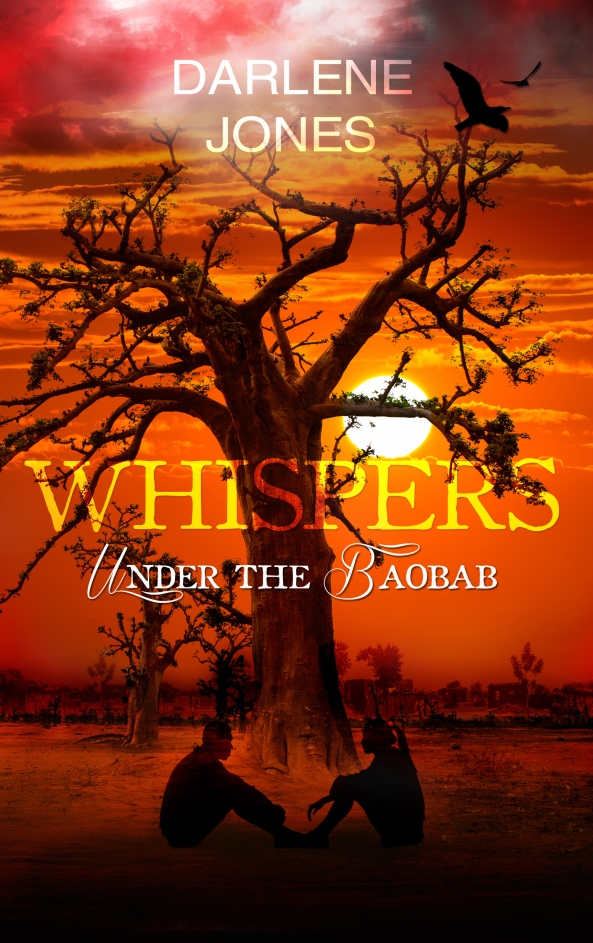
Whispers Under the Baobab, my seventh book, is as gratifying as my first. Perhaps even more so for not only have I honed the craft of writing in the process, I’ve set much of this one in West Africa including Mali, a country that has been dear to my heart ever since I lived there many years ago.

Even more gratifying are the comments from my Nigerian friend, who graciously agreed to be a beta reader.

As an African currently living in Nigeria, my country, I could relate especially with the African setting. Aside from developing the plot, Jones doesn’t fail to present the reader with tidbits about the life and culture of Sidu’s people.
Some sequels tend to lose steam along the way, but not this one. This second installment is a book you can relax to, and finish in a day. If you are looking for a novel where good triumphs over evil, where love is mutual and undying, where new friendships are forged from the unlikeliest of situations, and above all, where the plot is driven by suspense and some bit of code-cracking, then Whispers Under the Baobab is the book for you.
Darlene Jones demonstrates exceptional talent as a wordsmith, and for plotting an intriguing story whose premise invites readers be to resolute in their quest for what is true and right.

See both books here: http://ow.ly/aKXh30bMH88

Thursday, May 25, 2017

How writers write.


Do writers  sit in a coffee shop or work at home? Do they insist on silence or handle noise by tuning it out? Long hand? Computer? Typewriter? Voice entry?
Haruki Murakami (http://ow.ly/RUSX308ju8Y) says, “When I’m in writing mode for a novel, I get up at four a.m. and work for five to six hours. In the afternoon, I run for ten kilometers or swim for fifteen hundred meters (or do both), then I read a bit and listen to some music. I go to bed at nine p.m.”
Maya Angelou (http://ow.ly/RUSX308ju8Y) says, “I keep a hotel room in my hometown and pay for it by the month.
I go around 6:30 in the morning. I have a bedroom, with a bed, a table, and a bath. I have Roget’s Thesaurus, a dictionary, and the Bible.  I have all the paintings and any decoration taken out of the room. I ask the management and housekeeping not to enter the room, just in case I’ve thrown a piece of paper on the floor, I don’t want it discarded. But I’ve never slept there, I’m usually out of there by 2. And then I go home and I read what I’ve written that morning, and I try to edit then. Clean it up.”
Emily St. Jonh Mandelauthor of Last Night in Montreal (Unbridled Books, 2009) and The Singer’s Gun (Unbridled, May 2010):
“I do most of my writing in my home office, at my unbelievably messy desk. It’s by far my favorite place to write—my cats and my music are there, and it’s a very peaceful room. I live in Brooklyn and work at a university in Manhattan, and I get off work in the mid-afternoon. Often if I have theatre tickets or some other plans that require me to be in Manhattan that evening, I’ll linger at work for a few hours. When that happens, I go to the library at the university where I work and write there for a while. Often, very often, I’ll find myself writing in the subway. I spend two hours a day on the F train, five days a week, and I always carry a notebook with me.”
Alexander Cheeauthor of Edinburgh (Picador, 2002) and the forthcoming The Queen of the Night:
“Usually it’s trains where I get the most writing done—I wish I could get a residency from Amtrak on a sleeper car, or an office booth in a cafe car. I recently had a residency at a colony in Florida, where I had two days of writing 17 pages a day and it would have continued if I hadn’t had to leave. I think anonymity and displacement help me no matter where I am—I need to feel like I’ve vanished and no one can find me.”
Nova Ren Suma, author of Dani Noir (Aladdin/Simon & Schuster, 2009) and Imaginary Girls (Dutton, summer 2011):
“I live in a tiny apartment in New York and can sometimes be found writing first thing in the mornings at a cafe, if I can find a good table, but I don’t stay there for long. There are the crowds. The noise. I can’t control the music on the stereo. The real place where I get most of my writing done is called the Writers Room. Billed as an urban writers’ colony in New York City, it’s a place for writers of all genres to go for space, quiet, and uninterrupted time to work. At various desks in the giant loft space of the Writers Room, I’ve written, no exaggeration, thousands of pages. When you pay for an ‘office space’ like this and have a dedicated place to go, one filled with other working writers typing up their own pages, it makes you all the more motivated to do your own work.”
And the rest of us?
            I believe most authors (like me) work at home, at a desk tucked in a corner somewhere, tuning out the normal noises of family going about their daily lives (or wearing earplugs) and adjusting their schedule to the demands of life.
Others don’t have it so good. My Nigerian writer friend says:
Pls you may have to ignore the doc I sent in my previous email. Because of the acute shortage of power I am sort of working under duress. Once I fix my gen I’ll be able to work freely.
And later:
I’ve serviced my generator and now I don’t have to depend on the government for power.
Like many other peace-abiding Nigerians, we somehow still manage to survive. Everyday is an ordeal and sometimes I can’t help but feel the Lord God is punishing us all for the crimes some of us (including the cabal) made by turning to the legendary tyrant Buhari. Nigeria’s pitiful condition is an open book. A researcher some years ago said we are the “Happiest People on Earth.” I wonder if this survey will stand the test of time.
Robert J. Sawyer says it best in answer to this question.
“Name some of the rituals or habits you indulge in while writing.”
Not to be dismissive, but the answer is (a) none, and (b) it should be none. A writer needs to write, period. He or she can’t wait for the muse, shouldn’t need peace and quiet and isn’t entitled to perfect conditions or the perfect spot. Rituals? Fingers on the home typing row. Habits? Getting down to work, whether it’s in my home, on a plane, in a hotel room or (among other places I’ve actually opened up my computer and started writing) in the ruins of Pompeii, on a ferry in Australia or on a park bench in the Yukon.
 www.darlenejonesaauthor.com

Saturday, May 13, 2017

Doing without


Quick! What was the thing you most recently complained about? Got your answer? Hold that thought.
Now read this.
“I am only replying now (it’s around 1:36 a.m.) because this is first time in days that we have had power. Add that to the recession and you have a really “beautiful” picture of life from my end.”
Electricity off for days? Recession? And I’m upset because my WiFi isn’t fast enough.
The quote is from an email my Nigerian friend sent me the other day. I’ve been getting reality checks from him for some time now. I look around my house. What would I be forced to do without if there were no electricity? Lights, stove, fridge, microwave, TV, computer, iPad, Paperwhite, phone, humidifier, heat; even the gas fireplace needs its electric starter.
I’ve a book I’d like to send you, I write. It’s not available in ebook format. What’s your address?
“The post office building is vacant and has been for some time. The last time I received a letter was six years ago.”
Okay, I think. I’ll courier the book. I check with various companies to find that no one delivers packages in his area of the country. Scratch that idea.
Each missive from him jolts me. He rarely complains, but I can sense how hard his life is and how difficult it must be to remain optimistic.
We take far too many things for granted in our cozy corner of the world. Does his plight make me want to give up what I have? Of course not. But it does prompt me to stop buying things I don’t need, to be less wasteful, to “use it up, wear it out, make do, do without.” And, knowing him has prompted me to increase my charitable donations to organizations like KIVA. It’s the least I can do.
www.darlenejonesauthor.com

Friday, November 7, 2014

When you're finished reading my books, try these.


I flog my books via blogs, Facebook, Twitter etc. so I thought it only fair to recommend books I’ve discovered and liked, some, but not all, written by fellow indie authors. Here are my reviews of six books I’ve enjoyed recently. All can be found on Amazon.

The Palaver Tree - My books are partially inspired by my experiences in Africa so this book was a natural for me. Subtle, direct, gentle, and jarring, The Palaver Tree takes the reader on an incredible journey from the safety of small town England to the dangers of Africa. But, for Ellie, Diane, and Tiffany, England isn't safe either as the wily and unscrupulous Gabriel cons them all.
And the Africa Ellie comes to know and love—the friends she makes and the children she teaches—cannot protect her from the dangers of either Gabriel or the rioting as rebels attempt a coup to overturn the government. I've lived and traveled in West Africa and found this book taking me down memory lane. Thankfully, I never had to face the dangers Ellie faced. If you're looking for a good read, that takes "ordinary" people into extraordinary circumstances, this is it. And, the ending is perfect


Night Must Wait - Masterful. Authentic. Gritty. Gripping. Complex characters. Night Must Wait has all the elements to make this novel so much greater than just another war story. Winter's subtleties in depicting the characters, the setting, the basic elements of Africa add depth and dimension much appreciated by this reader.

I lived in Mali at the time and could not visit Nigeria because of the war, but did travel through Niger, Benin (then called Dahomey) and Togo. I saw enough and knew enough about the area to relate to much in Winter's book. I have great admiration for what she has accomplished with Night Must Wait.

The Nine Lives of Charlotte Taylor - Good books intrigue and keep you turning the pages. Great books draw you in and wrap their soul around you until you feel that you are part of the landscape, and one with the characters of the story. The Nine Lives of Charlotte Taylor is just such a book. The fact that Charlotte is a historical rather than fictional character makes each aspect of her story that much more poignant. You read the book and immediately wish to reread it for fear you've missed some small detail. When you come to the last page and are forced to admit there is no more, you are left with a bittersweet heartache and know that Charlotte will be with you for a long time to come.


The Winter Pony - Wow! There aren't enough adjectives to describe how wonderful this book is. If I was cranky the next morning, it's Mr. Lawrence's fault because I couldn't stop reading. Who would have thought that a book written from a horse’s point of view could be so engaging? This tale of the trek to the South Pole provides a whole new perspective, one that this reader greatly appreciated.

Domingo’s Angel - A survey of fiction readers showed that the one most important aspect of a novel to readers was what they learned. Domingo's Angel fills the bill perfectly. The reader learns about conditions in Spain during Franco's rule through the lives of villagers in the mountains. The story is beautiful, heartbreaking, and haunting. The characters, depicted so vividly, stay with the reader long after the book is done. This is one I will read and reread. Do pick up a copy. You won't be disappointed.


Grows That Way - I don't like YA. I don't read YA. Caveat - I read (more than once) and loved Skinnybones and the Wrinkle Queen. So why am I writing a review for a YA book? Not just one, but the whole trilogy? Because Ketchen's books are amazingly well written and keep getting better and better. I won't call this a coming of age story as I can't stand that expression. What are they then? A story of a girl dealing with her family and friends at the same time as she is dealing with Turner Syndrome. Ketchen's characterizations are subtle and she informs as well as entertains. Each book can be read as a stand alone, but I urge you to read, in order, all three. You won't be disappointed. And then pass them on to any teen you know who loves horses.

Friday, July 11, 2014

Reading Reviews - a huge mistake?


I’m reading 419 by Will Ferguson—a powerful story, well told, with turns of phrase that delight.

 “Storms without rain. Winds without water. She woke, and when she sat up, the dust fountained off her and the voice that accompanied her once again stirred, once again whispered, “Get up. Keep walking. Don’t stop.

Vivid imagery abounds.

Zuma rock denoted not only the traditional geographical centre of Nigeria-the “navel of the nation” as it was known-but also the border between the sha’ria states of the north and the Christian states of the sough. Zuma rose up, rounded and sudden, on striated cliffs etched by a thousand years of rainfall and erosion. The ridges carved down its sides were the sort of lines that might be left by acid or tears.”

A woman from Canada, a girl from the north, a young man from the Delta, and a 419er. How will the lives of these disparate characters be woven together? I’m fascinated, enthralled, eager to read each evening, yet dreading the end, dreading the time when the story will be only a memory. The narrative makes me cringe and cry. I know this is a book I will read more than once.

I email my young Nigerian friend to tell him about the novel. He responds:
“ 419 - an internet scam organized by Nigerian scammers (aliases: Yahoo Boys, G-Boys). 419 is an alias that dates back to the past (I believe 1994-1997) in Nigeria, when innocent people, mainly teenagers, were repeatedly abducted and killed. Their bodies or body parts were then used for big money rituals.

I've come across painful remarks on Twitter, Facebook, and some other interactive sites about Nigerians being fraudsters. That they target white people and rob them of their money using various means; including telling them pitiful stories just to incite their help.”

I’m about three quarters of the way through the book at this point and the urge to learn more about Ferguson’s research can no longer be ignored. Goggling proves to be a huge mistake. The first items that come up are reviews from highly respected sources, and while they don’t lambaste the book, they do contain enough negative comments to diminish my pleasure in the reading and cause a rather sour feeling.

I turn away from the computer in disgust, push the reviews out of my mind, and return to my Kindle. I refuse to let someone else’s opinion color my own judgment, my own enjoyment of the novel.
Sitting now, writing this, I wonder if I should stop writing reviews. Am I guilty of spoiling another’s enjoyment, of perhaps causing someone, because of my arrogance, to dismiss a novel without even giving it a chance? Conversely, does a review I write of a book I love convince a reader to pick up that book only to find that it doesn’t work for them? What makes me think I can or should pass judgment for another reader?

But the author in me craves reviews. They’re our “word of mouth” and vital to marketing. If we’re to have sales at all, we need people talking about our books, reviewing them, recommending them to fellow readers.

Amazon sends me emails. “So, Darlene Jones, how did this item meet your expectations?” Do I answer? What do I say? My own sister, daughter, and aunt don’t always like the books I deem worthy of their time.

Yes, I did write a review for 419. Book buyers may or may not read it. They may or may not take it to heart in their decision making, but I’ve decided writing reviews is my obligation to fellow authors. It’s my “word of mouth” gift to them. I hope readers of my books will do the same for me.


Sunday, April 20, 2014

Le me introduce you to Uzo


I don’t remember how we met. Uzo reminds me that he was surfing Wordpress looking for authors, found my blog, and read some of the posts about Mali. He made a comment, I responded and a new friendship was born.

Uzo is a young Nigerian with a blog. He lives in Asaba, Delta State (South-South Nigeria), one of the oil producing states in his country. I’m an older Canadian with a blog. I live a world away (in so many respects) on Vancouver Island, Canada.

Uzo writes novels. I write novels. Uzo writes in English, which is not his first language. As he says, “English is quite a vast language. Every day is a learning process for me.”

We begin by talking about books. We both like Chimamanda Ngozi Adichie. I’d read Half a Yellow Sun. He told me about Purple Hibiscus. Here’s what he had to say about that book. “Purple Hibiscus is a wonderful story. Adichie did a marvelous job there from the first person pov. Kambili's account is so real and reflects the life of a rich, caged Igbo child-woman during one of the military regimes in Nigeria.”  We’re both anxious to read Americanah.

Uzo says, “I’m a no-good writer. I'm just a wannabe like you guys call it.” On the contrary, Uzo is a powerful writer. Here’s a sample.

Although the Liberian war is now over, I cannot wish away the memories. There are nights in my sleep when I still find myself dressed in army uniform, AK-47 ready. On these nights I hear the voices of parents calling their children; others joking, shouting: “Where’s your bunker?” The air cracks and I hear the sounds of diving jets and stuttering LMGs. Fire, blood, bullets and bodies everywhere. Things soon simmer to normal as danger passes. People fill the streets, young boys and girls going on various errands. Then he appears in a blood-stained enemy uniform. His oily dark face is teased with abandon. He’s about to aim his rifle at me. In my dreams, he dies in different ways. I’m his killer. Something tells me that he is my son. But I’m too afraid to believe it.

I’m not a professional editor, but I’ve offered to help Uzo with his English as he’d be drained if he had to pay an editor, so files are sent back and forth. I’m careful not to tamper with the uniqueness of his voice.

Only the eyes that moved swiftly would see the legs that desperately sprinted across the farms and pathways. Thereafter thoughts would arise if the runner was after something, or rather, was the prey.


Beautiful, right? And yes, my life, as a person and as a writer, is richer for having met him. That’s the beauty of the Internet.